
Joakim Appelquist (IVA): Towards a shared vision of Sweden as a nation of technology and innovation
The Royal Swedish Academy of Engineering Sciences (IVA) has played a central role in bringing together research, industry, and society for over a century. When Sweden Startup Nation conducted a preliminary study together with IVA, the ambition was to address something that has long been missing in the Swedish innovation landscape: a clear, data-driven system image of Sweden as a technology and innovation nation.
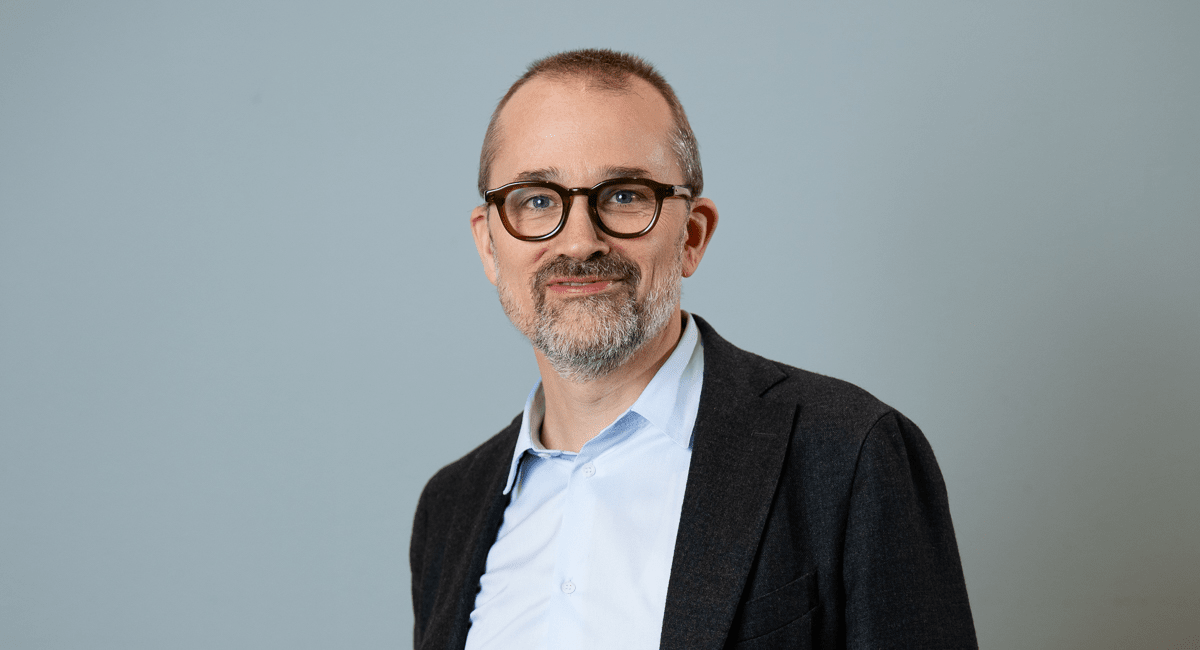
Joakim Appelquist, Academic Secretary and Deputy CEO at IVA, works to promote a stronger systemic understanding of Sweden's innovation landscape.
The preliminary study was conducted within the framework of IVA's long-term vision project Swedish Futures and aimed to investigate whether and how such a system could be built in practice.
We meet Joakim Appelquist, Academic Secretary and Deputy CEO at IVA, for a conversation about the innovation system, the role of the startup sector, and why data is crucial to Sweden's future competitiveness.
A meeting place at the heart of the innovation system
Joakim Appelquist has extensive experience in Swedish research and innovation policy, with over 15 years at Vinnova and experience from the KK Foundation. “
—IVA is essentially a policy actor,” he says. It is an independent academy with around 1,300 members from academia, industry, and the public sector. We are not an organization that carries out initiatives ourselves, but our role is to bring together actors, analyze challenges, and propose solutions that strengthen Sweden as a country of technology and innovation.
IVA's strength lies precisely in its ability to act as a bridge—what was previously called the triple helix —between research, industry, and decision-makers.
– We are a meeting place. Many of those who participate in our analyses are also the ones who later help implement decisions. This ensures that our work has an impact.
At the same time, Joakim is clear that IVA wants to broaden its perspective even further.
– IVA has historically had strong representation from large companies and academia. Now we want to get better at capturing the new – or semi-new – business community: startups and scaleups based on the very technologies we work with.
A preliminary study to examine the entire system
The background to the collaboration with Sweden Startup Nation IVA's new long-term vision project, Swedish Futures, which looks ahead to where Sweden should be as a technology and innovation nation in 2035.
"As part of that work, we saw a clear gap," says Joakim. Today, there is no way to visualize Sweden as a country of technology and innovation at the system level.
Analyses are plentiful, but often divided into individual sectors or technical areas.
– The strange thing is that we are very good at system analysis in Sweden, but in this particular case, we lack the big picture. When we were looking for actors working with similar issues, in order to avoid duplication of work, we identified Sweden Startup Nation.
The preliminary study was conducted as a limited project, focusing on testing methodology, data access, and visualization approaches.
– You have a clear focus on startups and scaleups, while we aim to highlight the entire innovation system. The preliminary study gave us the opportunity to investigate whether these perspectives can be combined into a common system view.
Data as a basis for better policy and better stories
A recurring theme in the conversation is the need for better, more systematic data.
"It's striking that even in fairly advanced policy discussions, basic facts are still missing," says Joakim. What is actually big and what is small? Where are the investments? Which sectors drive export revenues? Where in the economy are startups and scaleups found?
Without this type of data, it becomes difficult to prioritize analyses, and policy responses risk becoming blunt.
We often say that a certain sector, such as life science or deep tech, is "tough." But how tough is it really? What does that mean in terms of numbers?
But the data is not only needed for decision-making.
We know that Sweden is very good at startups. But internationally, we often only have stories: Spotify, Klarna, a few others. It becomes a completely different matter when you can back up the story with figures.
Sweden as a global startup nation – with the right conditions
Despite the challenges, Joakim is cautiously optimistic about Sweden's position internationally.
– We have very good conditions. Outside the US – Silicon Valley and Boston – Sweden is probably the country with the best ecosystem dynamics.
He believes that the combination of R&D-intensive large companies, world-leading research, and a vibrant startup community creates an upward spiral.
– It already works very well compared to almost every other country. The question is how we can make it work even better and really take advantage of the momentum that exists.
When it comes to risks, he points above all to the issue of capital—especially as innovation moves toward more capital-intensive deep tech areas.
– If we are serious about deep tech, we cannot use the same investment models as for fintech or gaming companies. The capital requirements and time horizons are completely different.
Areas where Sweden can take the lead
In a recent analysis based on Swedish data, IVA has identified several areas with particularly high potential.
Life sciences clearly stand out, as does synthetic biology. We are very strong scientifically, but we are not yet seeing the full benefits in terms of startups and scaleups. There is a lot to be gained there.
Here, the connection between research, capital, and policy becomes particularly clear, and the need for systemic understanding is great.
The goal: a common platform for system understanding
So what does Joakim hope the Sweden Startup Nation pilot project Sweden Startup Nation lead to?
– The preliminary study has provided us with valuable insights into both opportunities and challenges. The next step is to decide whether and how the work can be developed further, for example in the form of a more permanent platform for the Swedish technology and innovation system.
He paints a concrete picture of the goal:
– The next time Ebba Busch stands on a stage in Las Vegas and talks about innovation, it shouldn't just be an inspiring speech. There should be figures too.
At the same time, he is realistic about the difficulties.
There is a reason why no one has really done this before, even though the need has been clear for a long time. But the preliminary study shows that it is possible to take important steps in that direction. If we succeed, it could be very valuable—both for Sweden and for everyone involved in the innovation system.
